

About Bisayà
Bisaya-what?
‘Bisayà’ names a group of islands in the center of the Philippines and a family of languages. It also stands for a way of life and a way of cooking, a cuisine in its own right. But where does the word come from?
A word without a birth certificate
Shrouded in mystery, a bit like its people
Legend has it that the sultan of Brunei cried out ‘biza-yah’, how wonderful, when he first saw the Visayan islands. It is only a legend. Like the idea that we were the first to settle the Philippine islands, it is at best a guess.
We may not know where the word comes from, but we do know what it meant. Alcina, a 17th-century Spanish missionary and historian, described the Bisaya as ‘happy people’: someone with a fine and pleasant disposition, from the root saya, joyful.
Hear it on Filipino television, though, and it is often meant with a little condescension: the Bisaya as the domestic helper, the simple person from the province. In parts of Malaysia the word once meant a slave. And we have been linked to the Pi-She-Ye raiders who harried the Chinese coast in the Song dynasty. Don't underestimate us!
What it means to me
Pure, native, straight from the farm
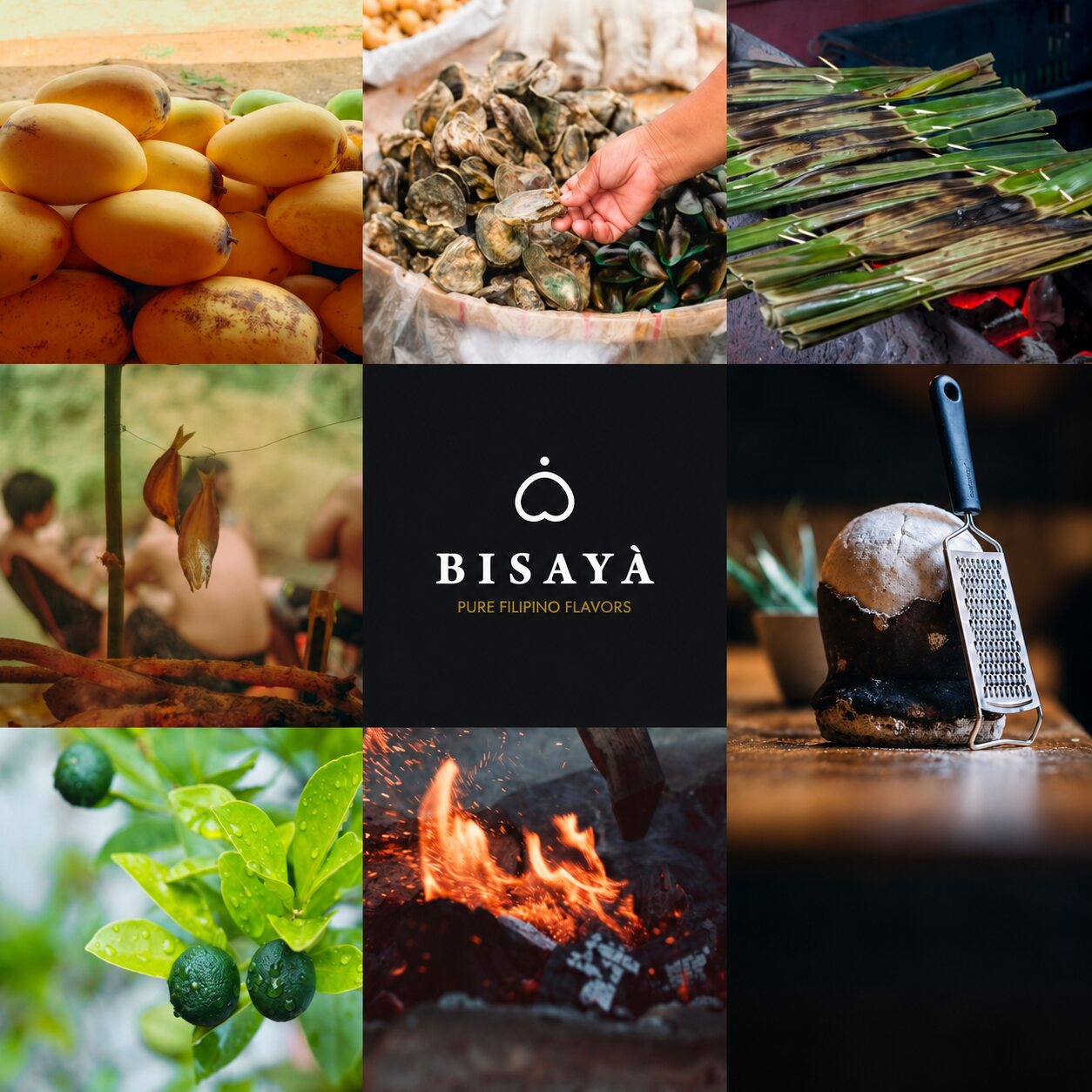
History aside, for me ‘bisaya’ has always meant pure, native, local food. Fresh from the farm, or preserved to last through the monsoon. Wholesome food that heals. Food for the soul, connecting us with nature and with our ancestors.
- Bisaya nga manok
- Visayan wild chicken, caught and cooked by my father over a smoky fire on our farm.
- Bisaya nga kamatis
- Visayan tomatoes, small and full of flavor.
- Bisaya nga pantat
- Freshly caught catfish from the river.
- Binisayan tambal
- Medicinal herbs from our hills and the Panay mountains.
The logo
The ‘Bi’ in Bisayà
What is that strange logo? A UFO? A belly button? A cheeky cloud? All wrong. It is the letter ‘Bi’ in Baybayin, our old Filipino script.
Baybayin was first written on palm and banana leaves, hence its curls: anyone who has tried to write on a leaf knows that straight lines tear it. Later the letters were carved into bamboo and rubbed with ash.
Baybayin is a syllabic script. Every consonant carries the vowel /a/; for another vowel you add a mark, a kudlit. The shell shape on its own reads ‘Ba’. With the dot on top it becomes ‘Bi’, for Bisayà. Or for Debbie.
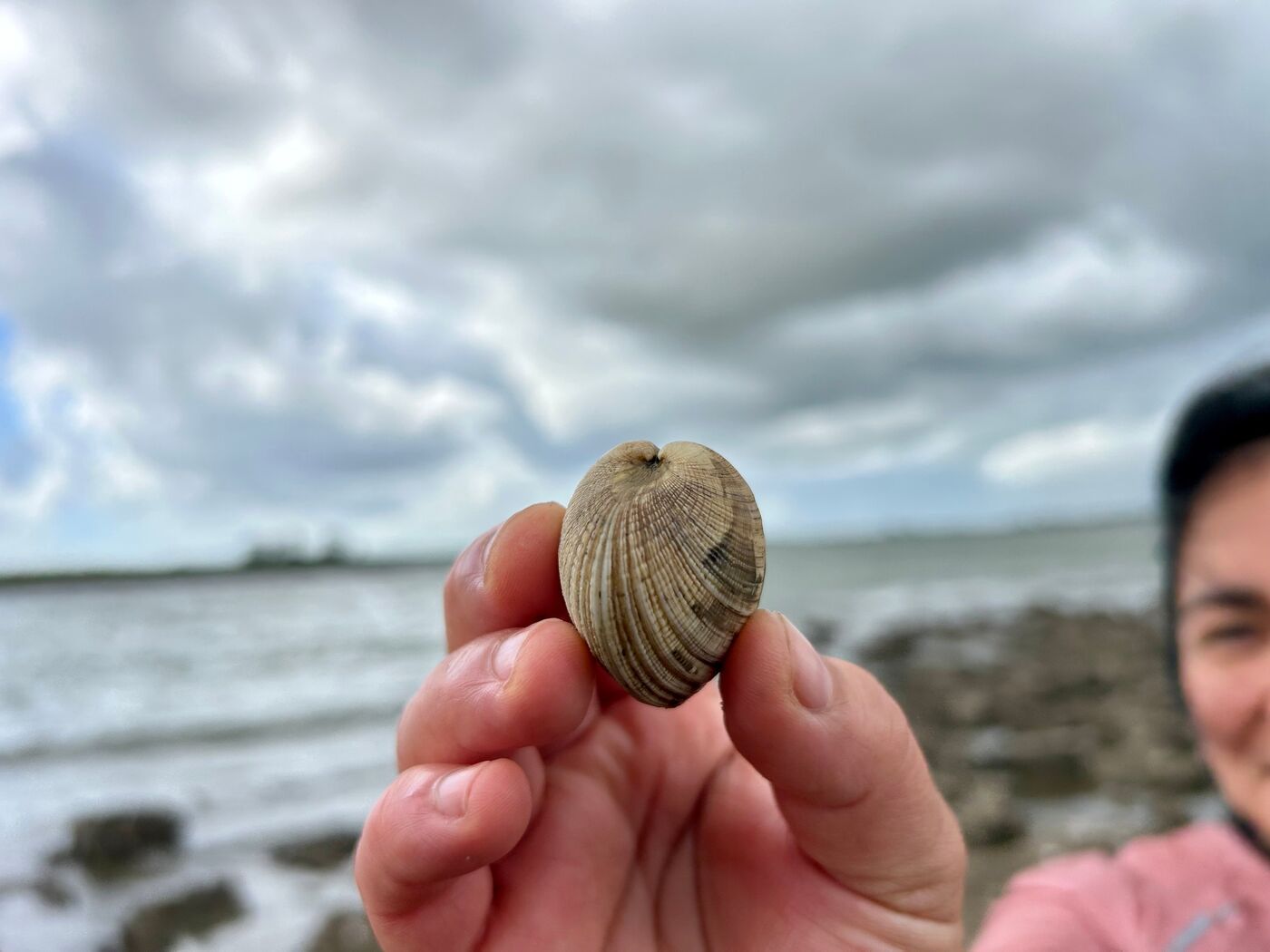
My favorite theory is that the letters come from shapes in nature, like the giant clams along our shores. We don't have those in Europe, but the cockles I love to forage in Zeeland always remind me a little of our Baybayin.
FAQ
What is kinilaw? Is Filipino food spicy? How does bread delivery work?
Answers to the questions we hear most, about Filipino food, booking chef Debbie and ordering Filipino bread. Read the FAQ