
Filipino bread

Bread, the Filipino way

In a country that lives on rice, bread became something of its own: the warm pandesal of early morning, the ensaymada you bring as a gift, the sweet buns of merienda. Here is where these breads come from, and what goes into ours.

A short history

A rice country that fell for bread

Before the Spanish arrived, the Philippine islands already had a rich tradition of steamed and baked rice cakes. The old word for bread, tinapay, first referred to rice preparations; only under Spanish rule did it come to mean wheat bread.

Wheat came with the colonisers, for communion bread and for their own tables, and it hardly ever grew well in the islands. In Manila the ovens were soon run by Chinese bakers: a report from 1634 describes the city bakery and its Chinese workers. Spanish names, Chinese craftsmanship and local taste together shaped the panaderya, the neighbourhood bakery.

When cheaper American wheat arrived in the early 1900s, bread became an everyday food. Today almost every street has its panaderya, and its breads mark the rhythm of the day: pandesal at breakfast, sweet buns at merienda in the afternoon, a box of ensaymada as pasalubong, the gift you bring when you visit.

Many of these breads carry Spanish names, but most are Filipino inventions, made with butter, sugar, cheese, coconut and ube. That mix of influences, made entirely their own, is what Debbie bakes at Bisayà.

Classic ensaymada

Brioche coil

Classic ensaymada

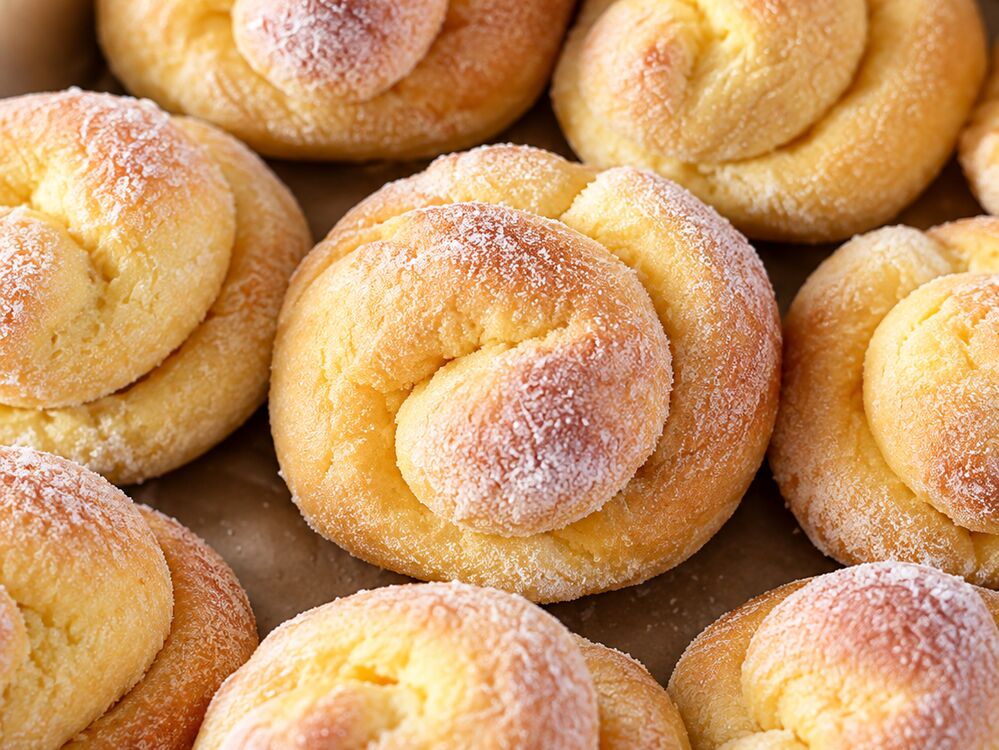
A soft, rich coil of brioche dough, brushed with butter and rolled in sugar. In the Philippines it is the bread you give: a box of good ensaymada goes along at Christmas, at Easter and on family visits, because everyone knows how much time and care goes into it.

The name and the coiled shape come from Mallorca, where the ensaïmada was already known in the 17th century and is made with saïm, pork lard. Bakeries in Spanish-era Manila advertised ensaimadas “as good as the best in Mallorca”. Filipino bakers then made it their own: around the 1930s butter replaced lard and grated cheese went on top, and every region developed its own version, from the rich, egg-yolk heavy ensaymada of Pampanga to the Bulacan version with salted egg or ham. Mallorcan by origin, Filipino by character.
Order this breadAll breads ↑

Cheese ensaymada

Brioche coil

Cheese ensaymada

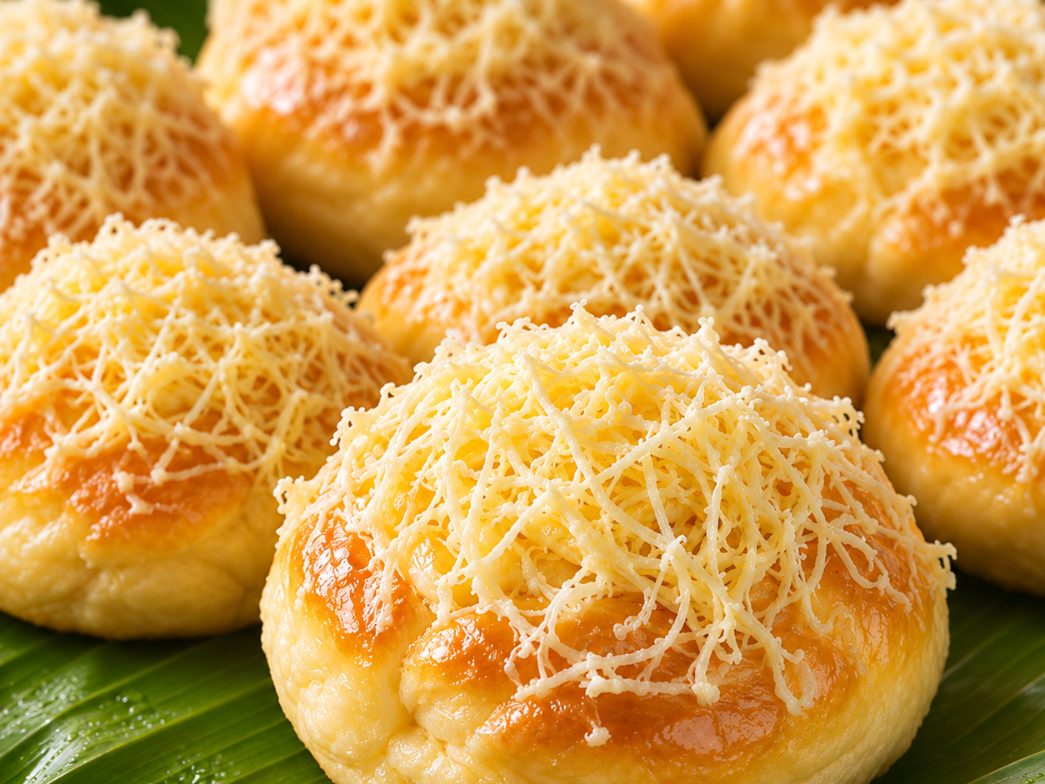
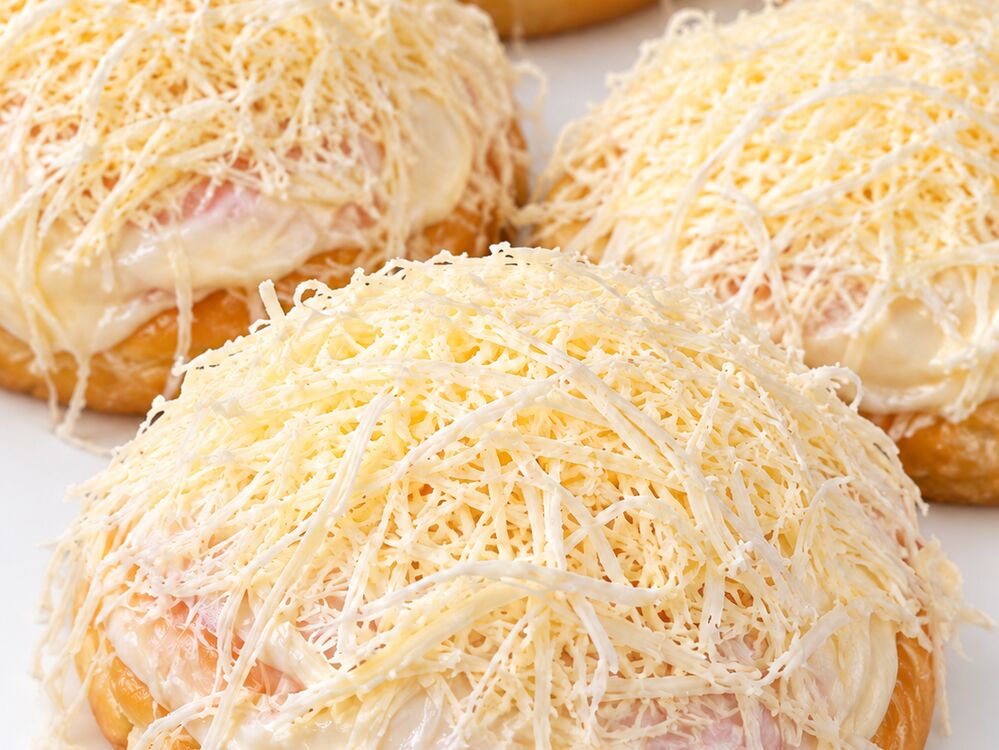
Our classic ensaymada, brushed with butter and sprinkled with sugar, then finished with a generous layer of grated Filipino cheese. Sweet and salty in one bite.

This is the ensaymada most Filipinos grew up with. Around the 1930s, Filipino bakers replaced the Mallorcan lard with butter and began topping the coil with grated cheese. That simple combination of sugar, butter and cheese became the classic of the Filipino bakery, and it still is today.

Order this breadAll breads ↑

Cream cheese ensaymada

Brioche coil

Cream cheese ensaymada

The same buttery coil, now with a sweet cream-cheese filling and a cloud of grated cheese on top. Sweet and salty at once, the way Filipinos love it.

There is no single “correct” ensaymada in the Philippines: since the butter-and-cheese versions of the 1930s, bakers have kept adding new toppings. The cream-cheese ensaymada is one of today's favourite variations, a modern chapter in an old story.

Order this breadAll breads ↑

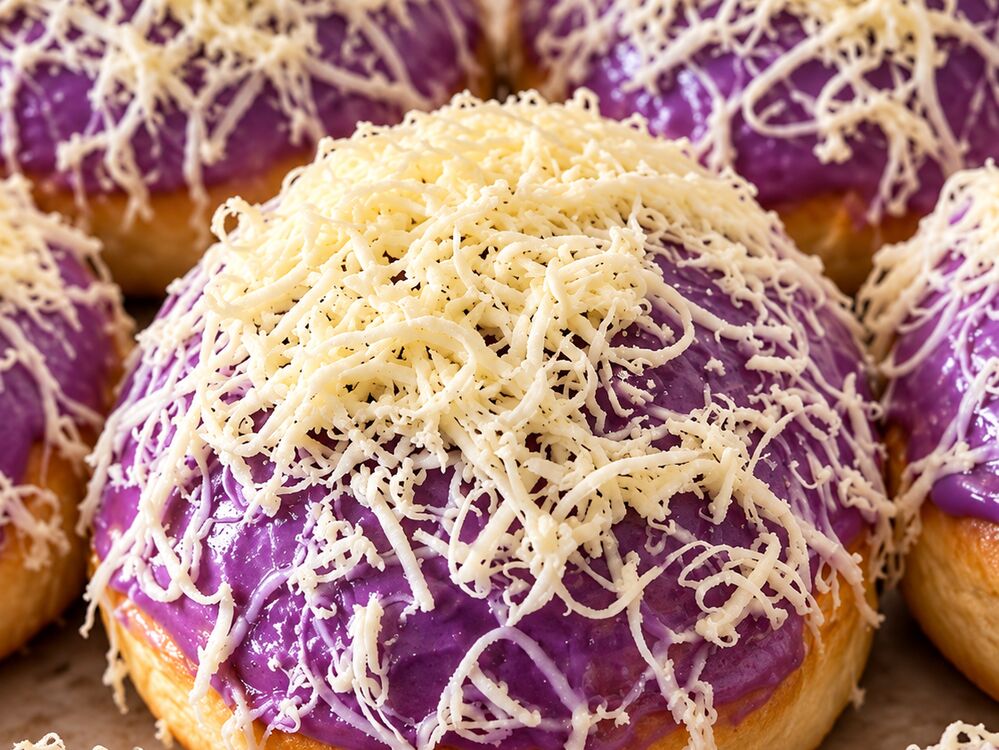
Ube ensaymada

Purple yam

Ube ensaymada

Ensaymada topped with ube halaya, purple yam slowly cooked with coconut milk and sugar, and finished with grated cheese.

Ube (Dioscorea alata) is anything but a trend. The Philippines is considered the yam's home, and in the Visayas, Debbie's region, missionaries already described many kinds of ube around 1670. Bohol grows about a third of the country's ube and holds an Ubi festival every January. Real ube tastes nutty, with a hint of vanilla; it is not the same as purple sweet potato or the purple colouring some industrial bakeries use. We use ube halaya, the jam that brings ube from the field to the bakery.

Order this breadAll breads ↑

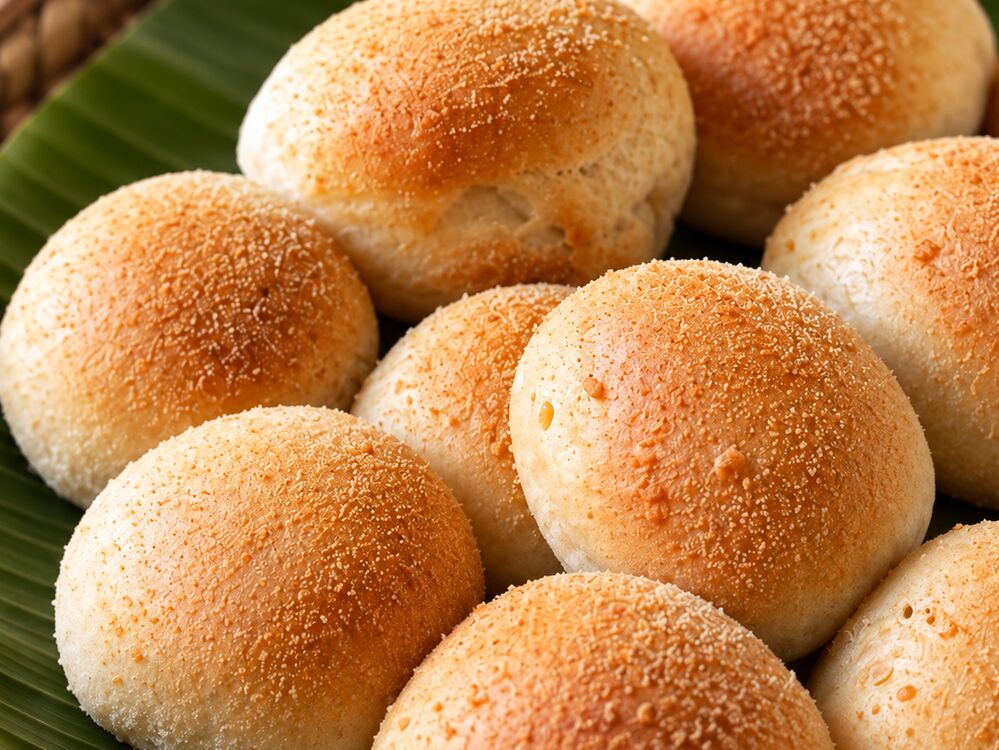
Mini pandesal

Breakfast rolls

Mini pandesal

The everyday Filipino roll: soft and slightly sweet inside, rolled in fine breadcrumbs. Best warm, torn open, with butter, cheese or jam, or dipped in coffee.

Pan de sal means “bread of salt”, though today's version tastes gently sweet. It descends from pan de suelo, a crusty bread baked on the floor of a wood-fired brick oven, the pugon. When cheaper wheat arrived in the early 1900s the roll became softer and cheaper, and it grew into the country's breakfast bread: by industry estimates about half of everything Filipino bakeries produce is pandesal. Buying warm pandesal early in the morning is still how many neighbourhoods wake up.

Order this breadAll breads ↑

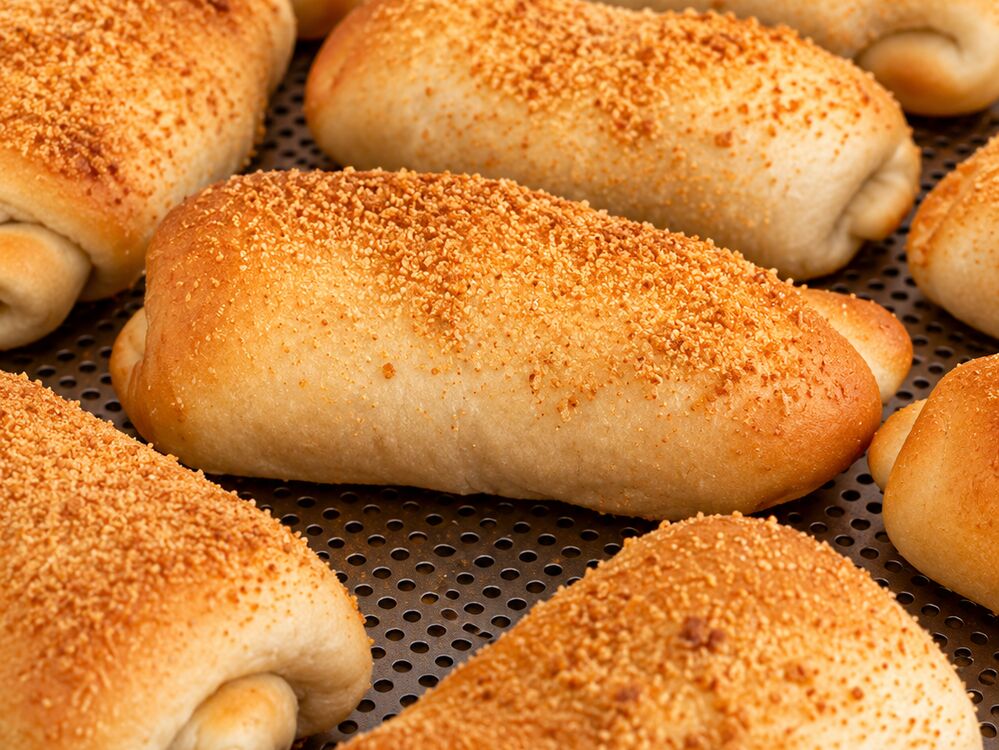
Spanish bread

Merienda

Spanish bread

A soft bun rolled up around a filling of butter, sugar and breadcrumbs that caramelizes in the oven. A classic for merienda, the Filipino afternoon snack.

Despite the name, Spanish bread does not come from Spain. It is a Filipino creation, also called señorita bread or pan de Kastila, and part of the classic Filipino bread basket together with pandesal and pan de coco. The Spanish name is a reminder of how much colonial vocabulary Filipino bakers borrowed for breads they invented themselves.

Order this breadAll breads ↑

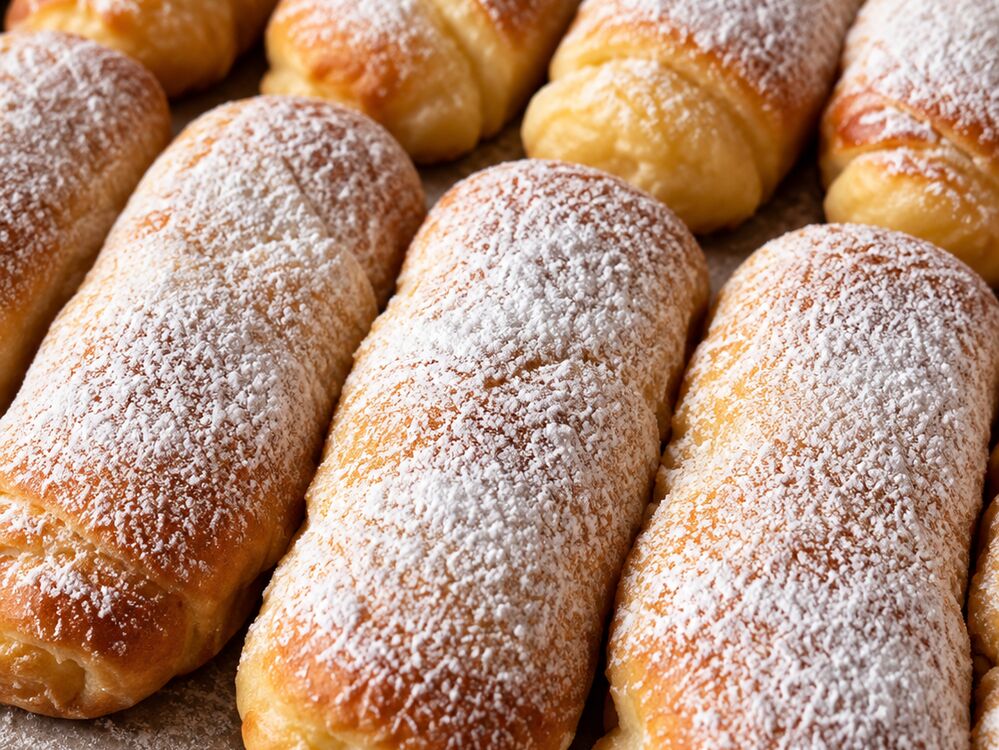
Cheeseroll

Sweet & salty

Cheeseroll

A soft roll baked around a core of cheese, brushed with butter and dusted with sugar.

The cheese roll is one of the fixtures of today's Filipino bakeries, loved for the same sweet-and-salty play as the ensaymada. Unlike pandesal or ensaymada, its history has hardly been written down: it is simply one of those breads everyone grew up with.

Order this breadAll breads ↑

Pande ube

Purple yam

Pande ube

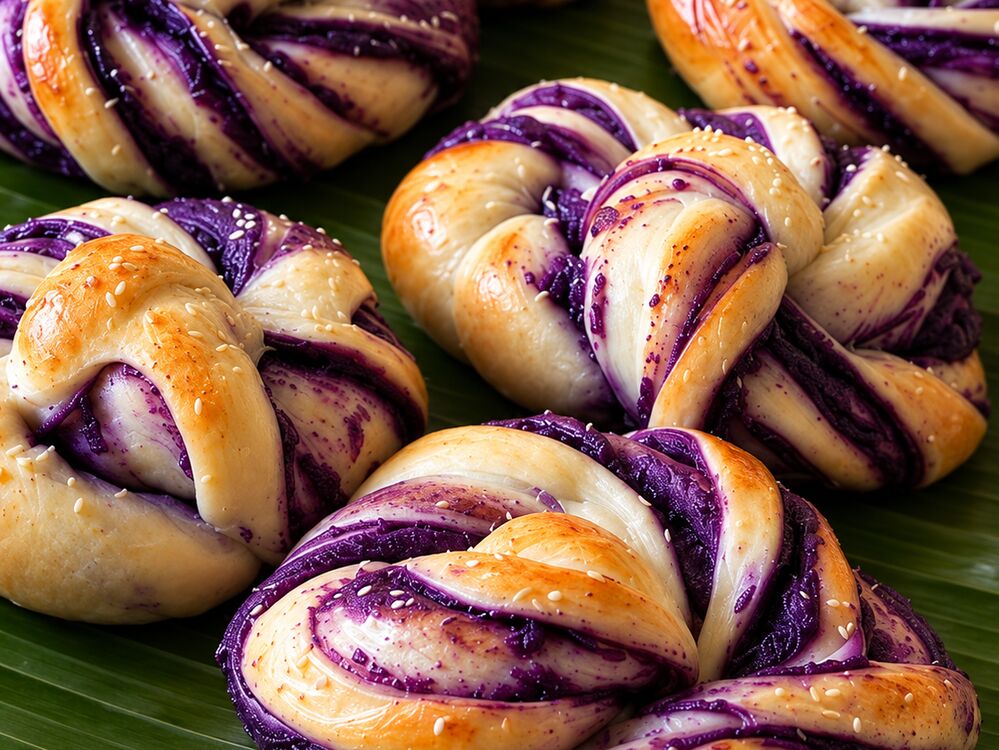
Soft bread braided with ube halaya and almonds, so every bite has a swirl of purple.

Bread and ube have long met at the Filipino table; around 2020 ube pandesal, often with cheese, became a nationwide craze and travelled with Filipino bakers to California, Chicago and Melbourne. Our pande ube braids the same pairing into one loaf.

Order this breadAll breads ↑

Ilonggo bibingka

Rice cake

Ilonggo bibingka

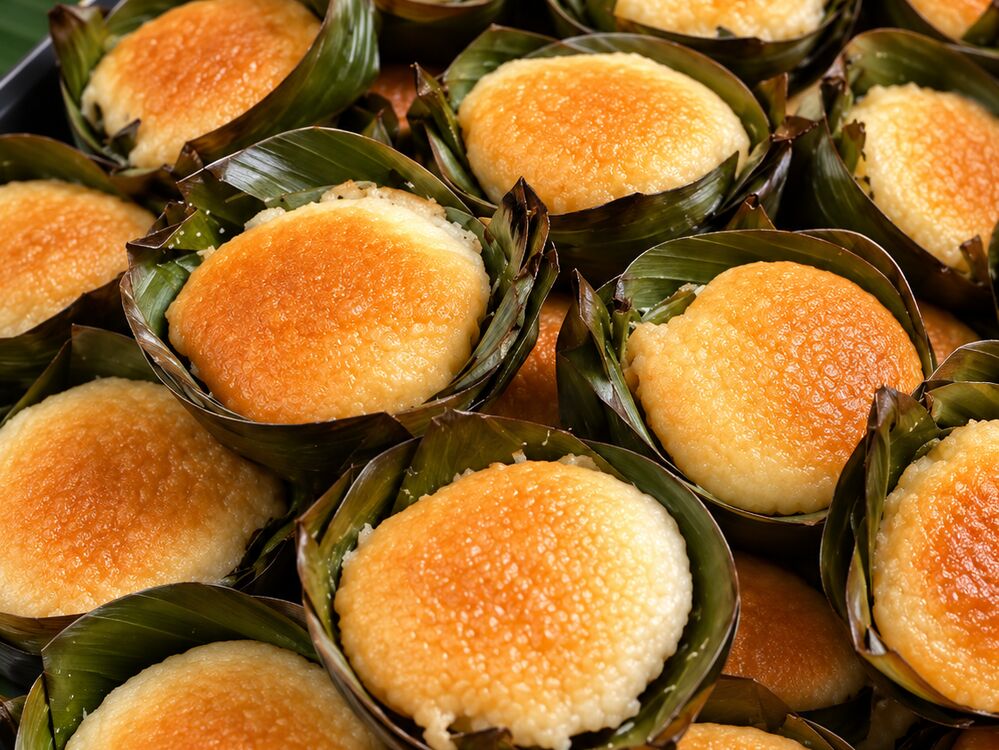
A cake of rice and coconut from Iloilo, baked in a cup of banana leaf, golden on top and gently smoky.

Bibingka is older than wheat bread in the Philippines: it belongs to the native tradition of rice cakes, and a Spanish priest already mentioned a breakfast rice cake called “bibinca” in 1751. Traditionally it bakes in a clay pot lined with banana leaf, with glowing coals below and on top, and around Christmas it is eaten after the dawn masses of Simbang Gabi. The version from Iloilo, on Debbie's home island of Panay, is denser and sturdier than the airy bibingka of Manila. In 2023 Iloilo City became the first UNESCO City of Gastronomy in the Philippines.

Order this breadAll breads ↑

Hungry now?

Everything is baked in small batches, only what has been ordered, and delivered to your door.